
Millard County Arrest Warrants Explained
An arrest warrant gives officers the legal authority to make an arrest, and it follows a different track than a bench warrant handed down after a missed court obligation. Utah Code §77-7-5 lets a magistrate issue a warrant instead of a summons when probable cause exists and the magistrate decides a warrant is needed to prevent injury, secure appearance, or protect the safety and welfare of others. Millard County keeps its records across court levels rather than in one place. The Fourth District Court handles felony and Class A matters, while Justice Courts take lower-level criminal, traffic, and ordinance cases within their jurisdiction. The court named on the case, not the county label alone, decides where to ask about release conditions or an appearance. The current Utah Code section spells out the warrant standard and the agency designation.
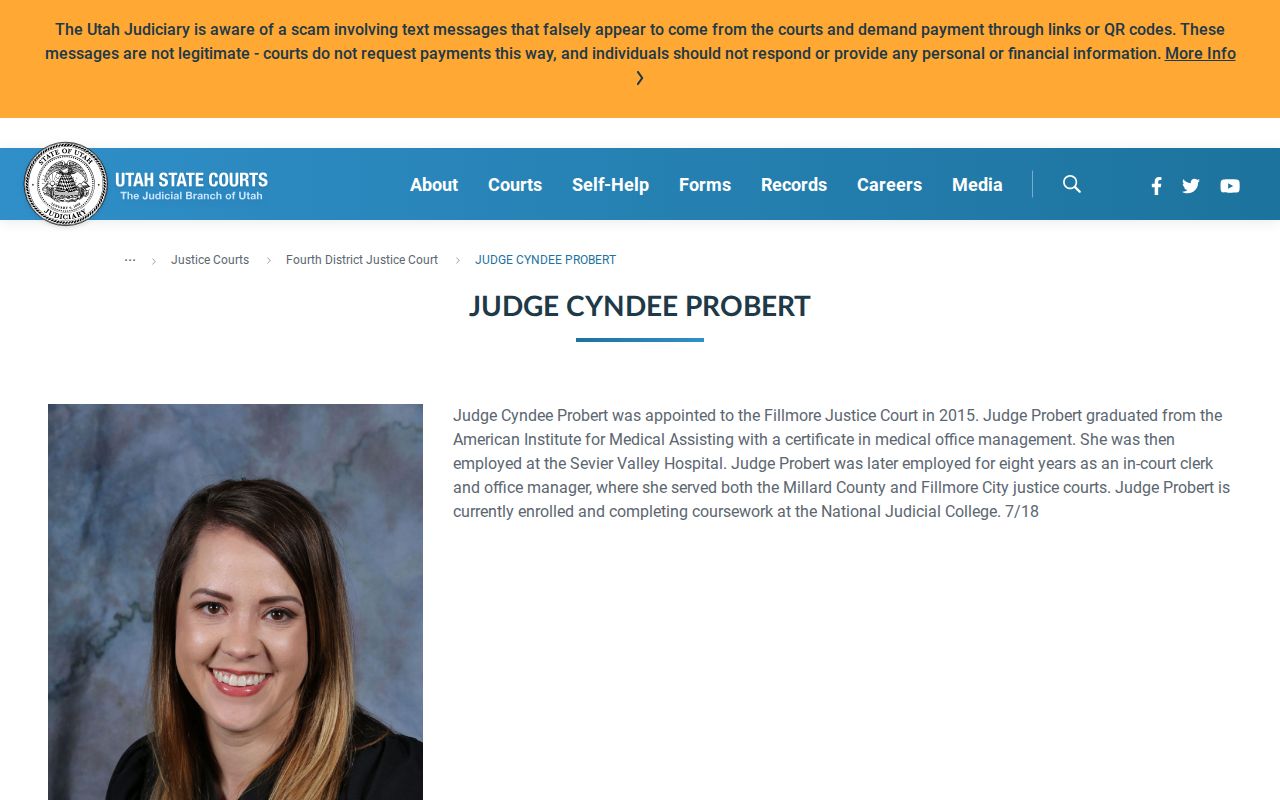
The Fourth District page identifies the local district-court system and its locations.
Utah Code and Millard County Warrant Review
The process starts with a complaint or affidavit placed before a magistrate. The magistrate weighs probable cause and asks whether a warrant, rather than a summons, is truly necessary under the statute. When the process requires a court appearance, the warrant must name the law-enforcement agency with jurisdiction over the offense. A clerk keeps the court record; the agency's role in serving it stays separate. The law also sets service rules by offense class and gives the named agency a duty to report status changes to BCI. Those statutory details describe the machinery, not a promise about how any specific Millard County matter will be handled. For the full text, see Utah Code §77-7-5 and the current Utah Rule of Criminal Procedure 6.
Inside a Millard County Arrest Warrant
A warrant or its case file can hold far more than a public search result shows. Rule 6 supports the general field categories listed here, though Millard County does not guarantee an online display will surface each item. Treat the statewide warrant page as a pointer, not the full record. Ask the issuing court for what the file actually contains.
| Warrant identifier | format not publicly verified |
|---|---|
| Issuing court or magistrate | Identifies the court process to confirm with its clerk. |
| Offense description | Read the official case record; do not rely on a third-party summary. |
| Release terms | May include bail, conditions, or a personal-appearance requirement. |
| Named agency | Shows the agency with jurisdiction when the statute requires it. |
| Service or return | Ask the court or agency about current status and the record of service. |
Millard County publishes no sample warrant number, no local status-code glossary, and no universal bond schedule. What follows is a set of questions to ask, not a copied record.
Millard County Arrest Warrant Service Roles
Each office plays its own part. The issuing court creates the legal process. The agency named in the warrant serves it and reports status information. BCI administers the statewide system. The Millard County Sheriff's Office is a key local law-enforcement contact, though the county posts no separate public warrant-unit schedule or universal walk-in procedure. The Millard County Clerk serves as the local Fourth District Court clerk, and county Justice Court clerks keep their own files. Delta or Fillmore City Justice Court may hold a city case. For an arrest-warrant concern, use the court and agency named in official paperwork rather than assuming the Sheriff controls the whole case. The official judge profiles show the local court roles.
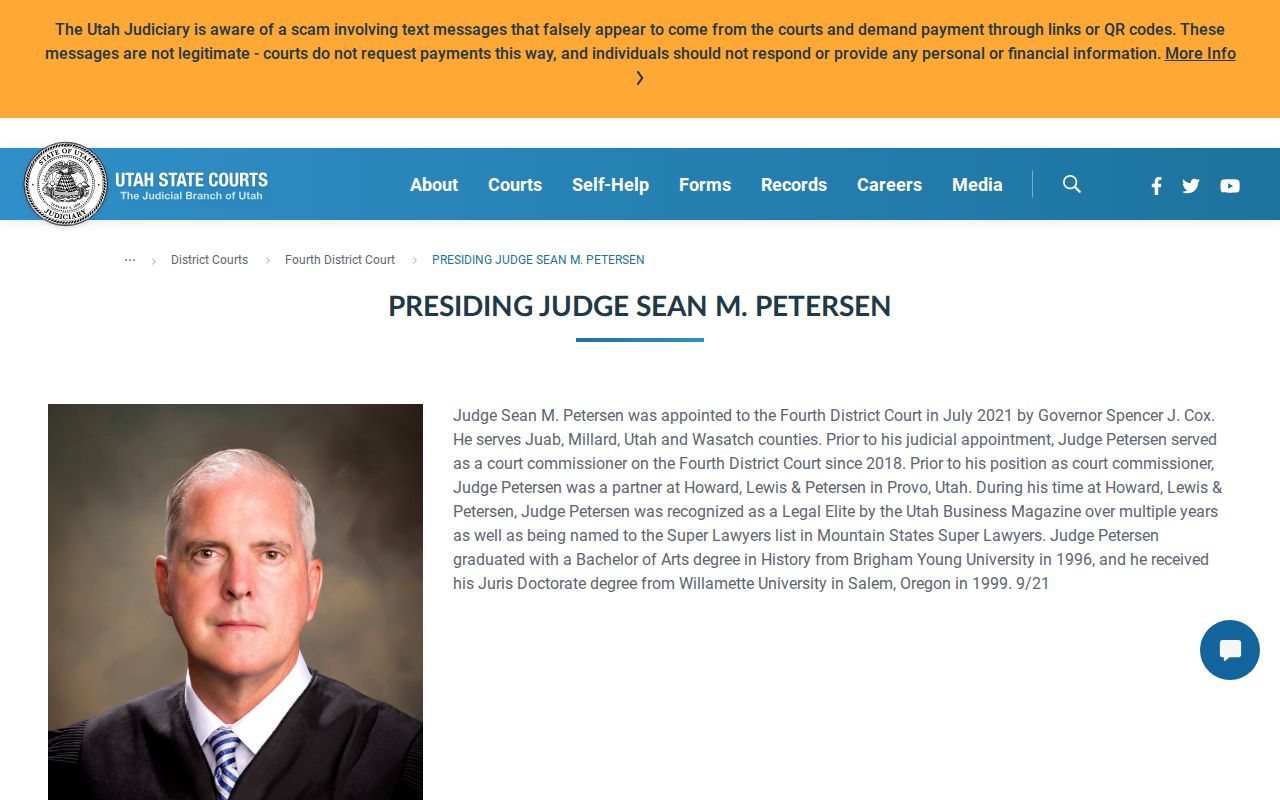
Judge assignments can change. For a current Millard County matter, the case notice and court clerk remain the best route.
Serving Arrest Warrants in Millard County
Utah law places service with peace officers and names the agency with jurisdiction when the accused is ordered to appear. Law enforcement reports warrant status changes to BCI. A public search result will not disclose every service operation, and the Sheriff's Office cannot set release or recall terms; that belongs to the court. Millard County disclosures named Justice Court Judge Cyndee Probert in 2026 material, which confirms a local lower-court role but says nothing about any individual warrant assignment. Take a current warrant record to the named court and agency. The Utah Courts profile for Judge Probert documents the Justice Court role.
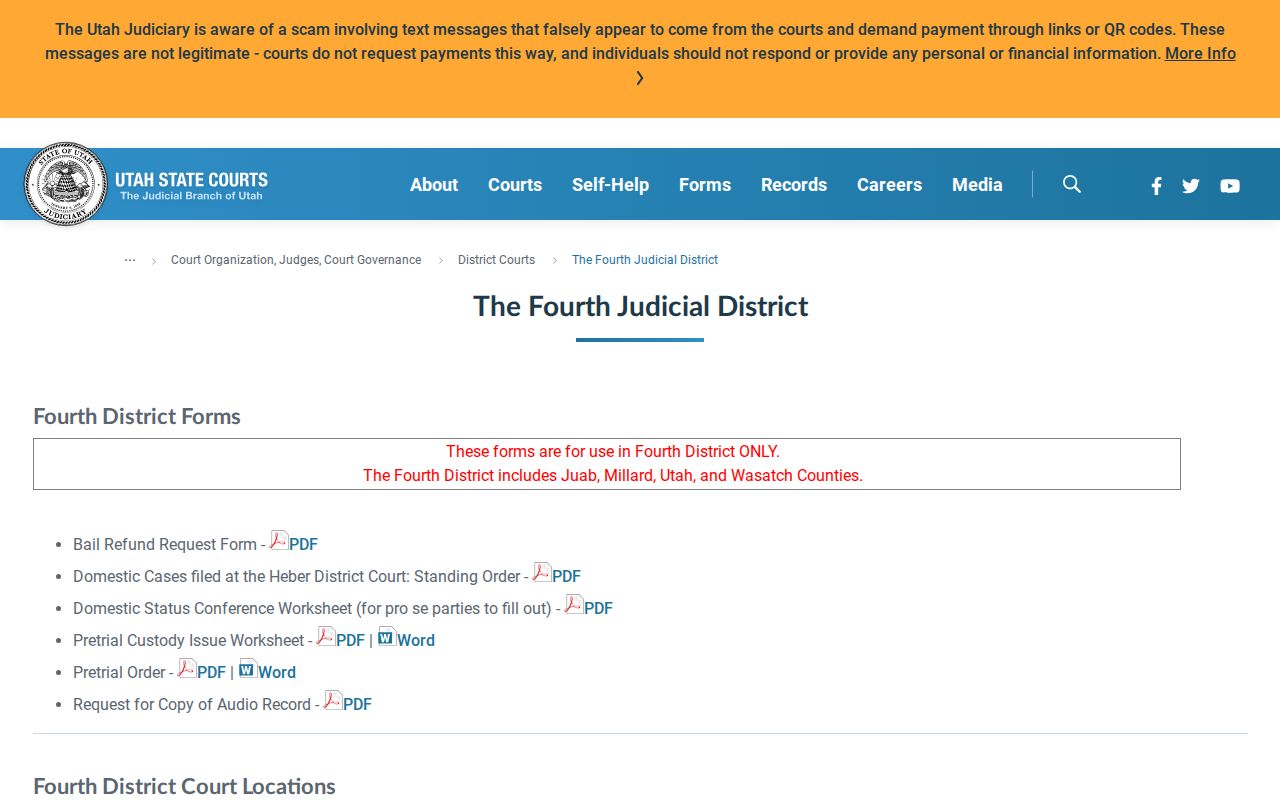
Official profiles provide court context, not a public warrant roster or case-status lookup.
Comparing Arrest, Summons, and Bench Warrants
These terms mark different routes into court. A summons simply tells a person to appear. An arrest warrant rests on the magistrate's review under statute and Rule 6. A bench warrant may follow a missed court appearance in a citation case. In Millard County, the court record determines which one applies to a particular matter.
| Process | Typical trigger | Millard follow-up |
|---|---|---|
| Summons | Order to appear without an arrest warrant | Use the court and date on the summons |
| Arrest warrant | Probable cause plus statutory necessity finding | Ask the issuing court about release and appearance terms |
| Bench warrant | Missed appearance or court requirement | Call the court that scheduled the event |
| Search warrant | Authorization to search a place or property | Separate procedure under Rule 40 |
A search warrant is not an arrest warrant. Utah Rule 40 covers search-warrant applications and execution, not a public self-check for an arrest process in Millard County.
Millard County Warrants and Federal Court
Federal warrants sit outside the Utah Statewide Warrants file and outside Millard County court systems. Millard lies within the U.S. District Court for the District of Utah. PACER provides federal docket access for eligible records, while the U.S. Marshals Service handles federal enforcement. Neither offers a complete public list of every federal warrant. Some filings are sealed or otherwise unavailable, and a missing docket entry does not confirm that no federal process exists. For a federal question, use the federal court or counsel rather than treating a Millard County search as nationwide. The U.S. District Court for the District of Utah is the official federal court route.
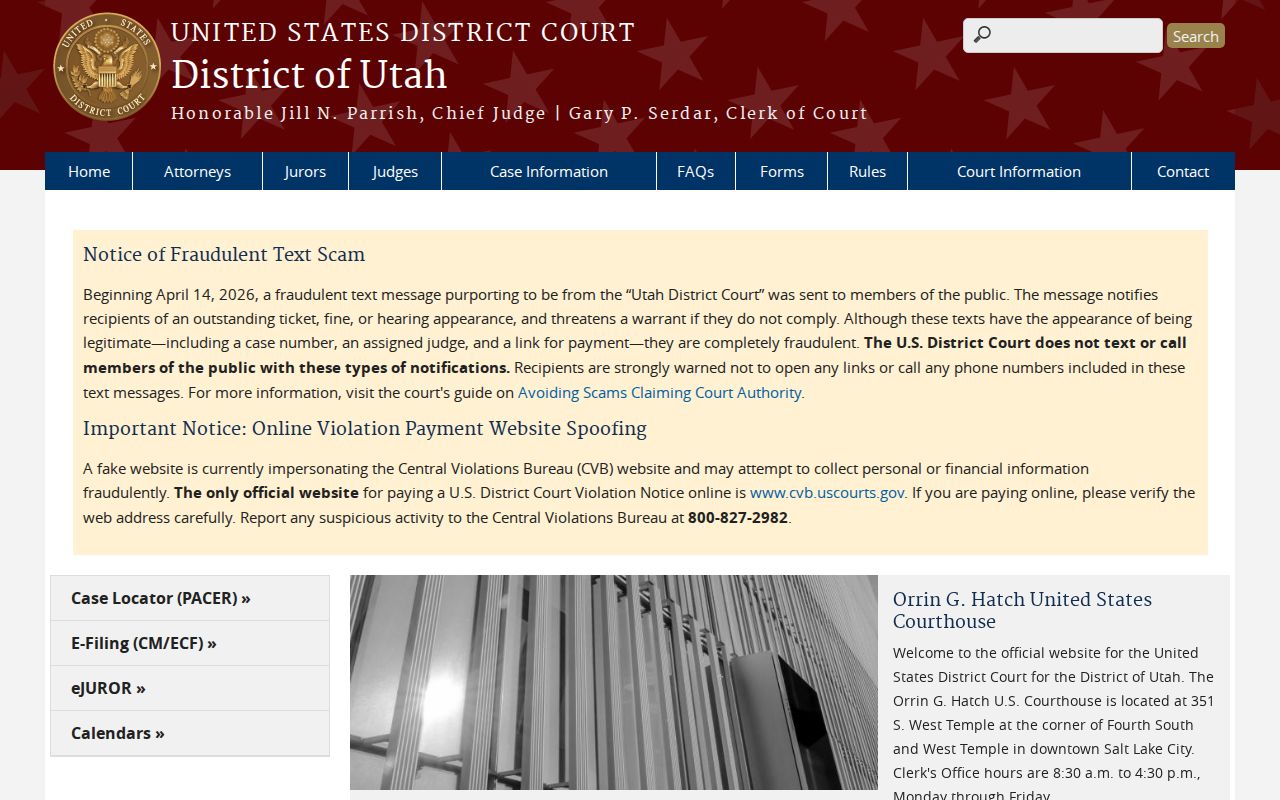
Federal court information belongs to a separate jurisdiction. It does not establish Millard County warrant status.
Millard County Arrest Search Limits
The statewide public search is a decent place to begin. It can point you to a public court case tied to a Millard County matter, though Xchange is not a warrant-status certification. Some records simply stay closed. Protected investigative files, juvenile records, sealed filings, and other nonpublic court materials may not appear. When you need something specific, ask the court directly or file through the county GRAMA process for records the county holds. A request asking for every active warrant at once may run into a new-compilation problem or touch protected material. The clerk can point you to the right record route. What the clerk cannot do is promise release of anything classified as nonpublic.
Millard County Arrest Warrant Steps
Think a Millard County warrant concerns you? Identify the case and the court first. Then talk with counsel before choosing how to appear. Ask the issuing court about the warrant's current status, release conditions, whether personal appearance is required, and any motion you must file. Millard County publishes no bond schedule, jail bond-window hours, surrender counter instructions, or universal walk-in process, so confirm each step with the court itself.
Speak with counsel first: Arrest, release, and appearance decisions depend on the court order and case facts. Do not rely on a generic online result to plan a surrender.
Once an official search is done, court confirmation is the safe next step. The Millard County home page also lays out payment, recall, and record-request routes for lower-court matters.
Fourth District Court in Millard County
The Fourth District Court serves Millard alongside Juab, Utah, and Wasatch counties. Its Millard County Clerk operates as the local district clerk, with the courthouse complex in Fillmore. Felony and Class A criminal matters belong in District Court. It does not replace the East or West Justice Court for a lower-level citation. For a case already filed, pull the file with the court number or Xchange. Then ask the clerk what current order applies. Utah Rule 9A governs post-arrest presentation. It creates no universal local surrender schedule, though, so arrangements go through the Millard County court itself.